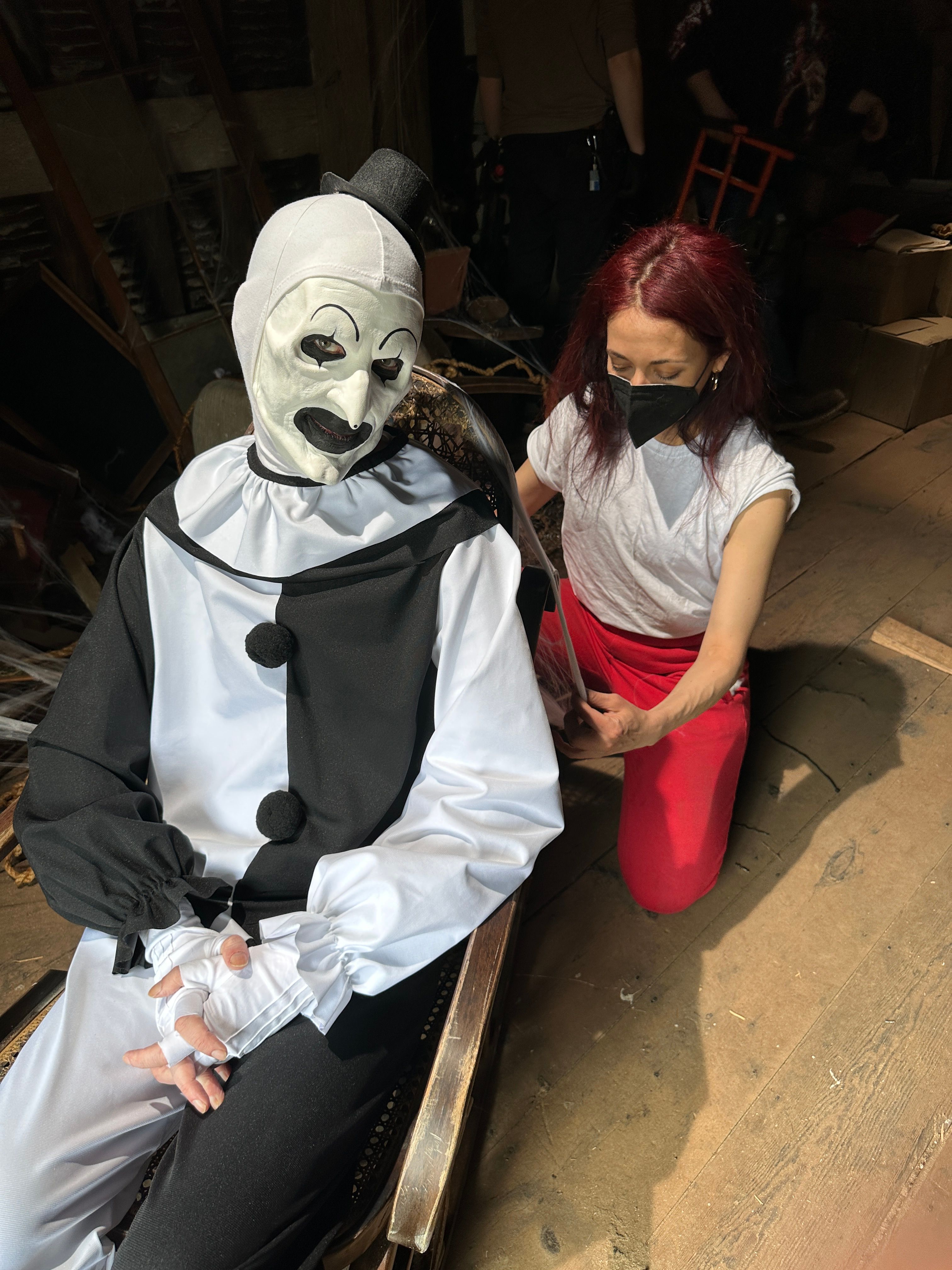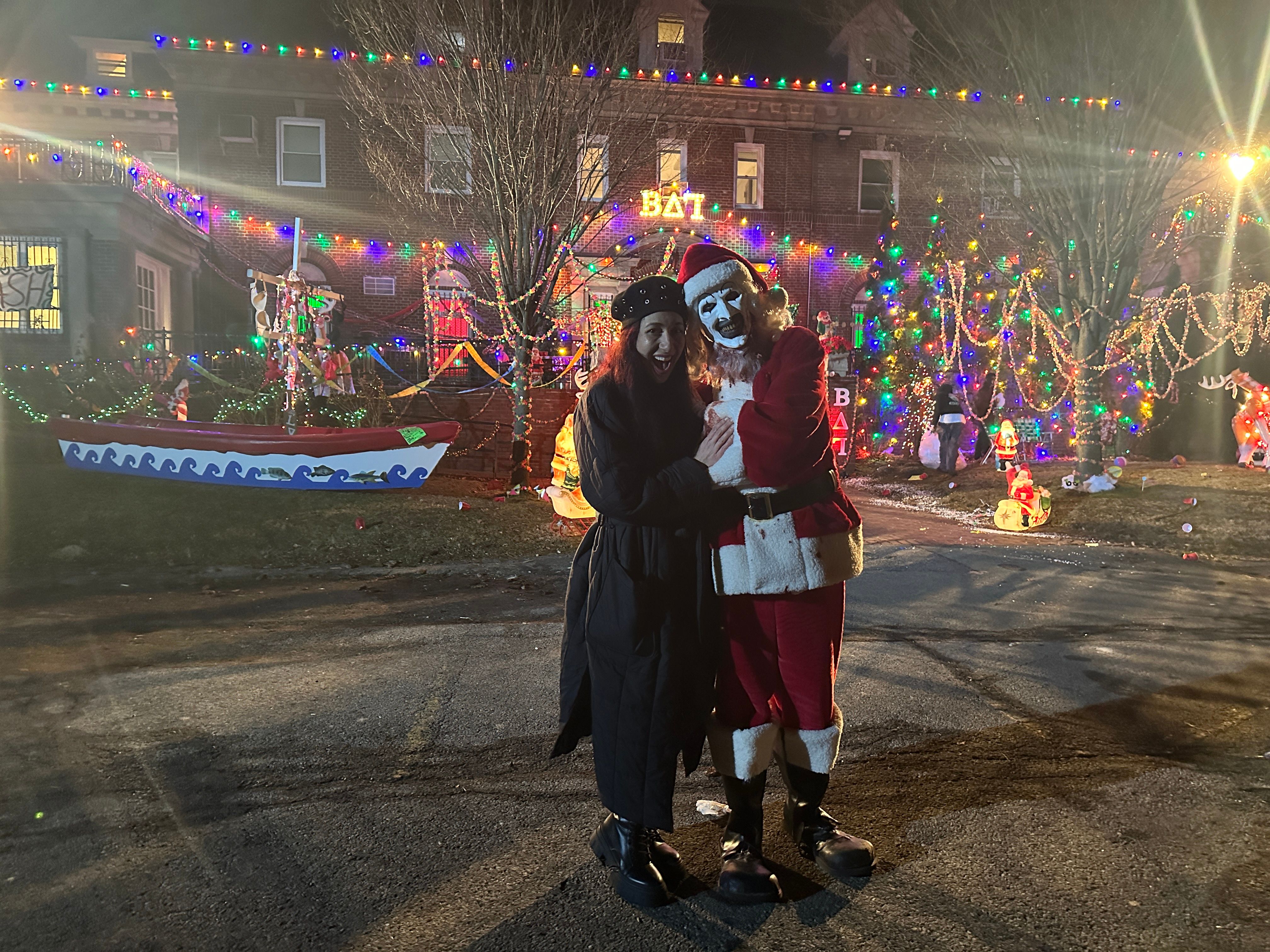
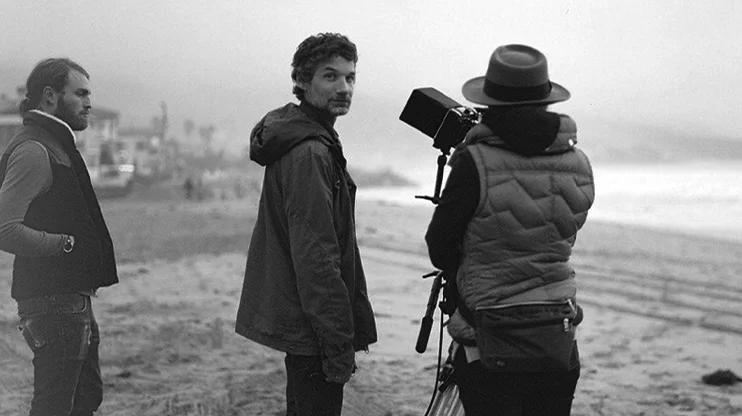
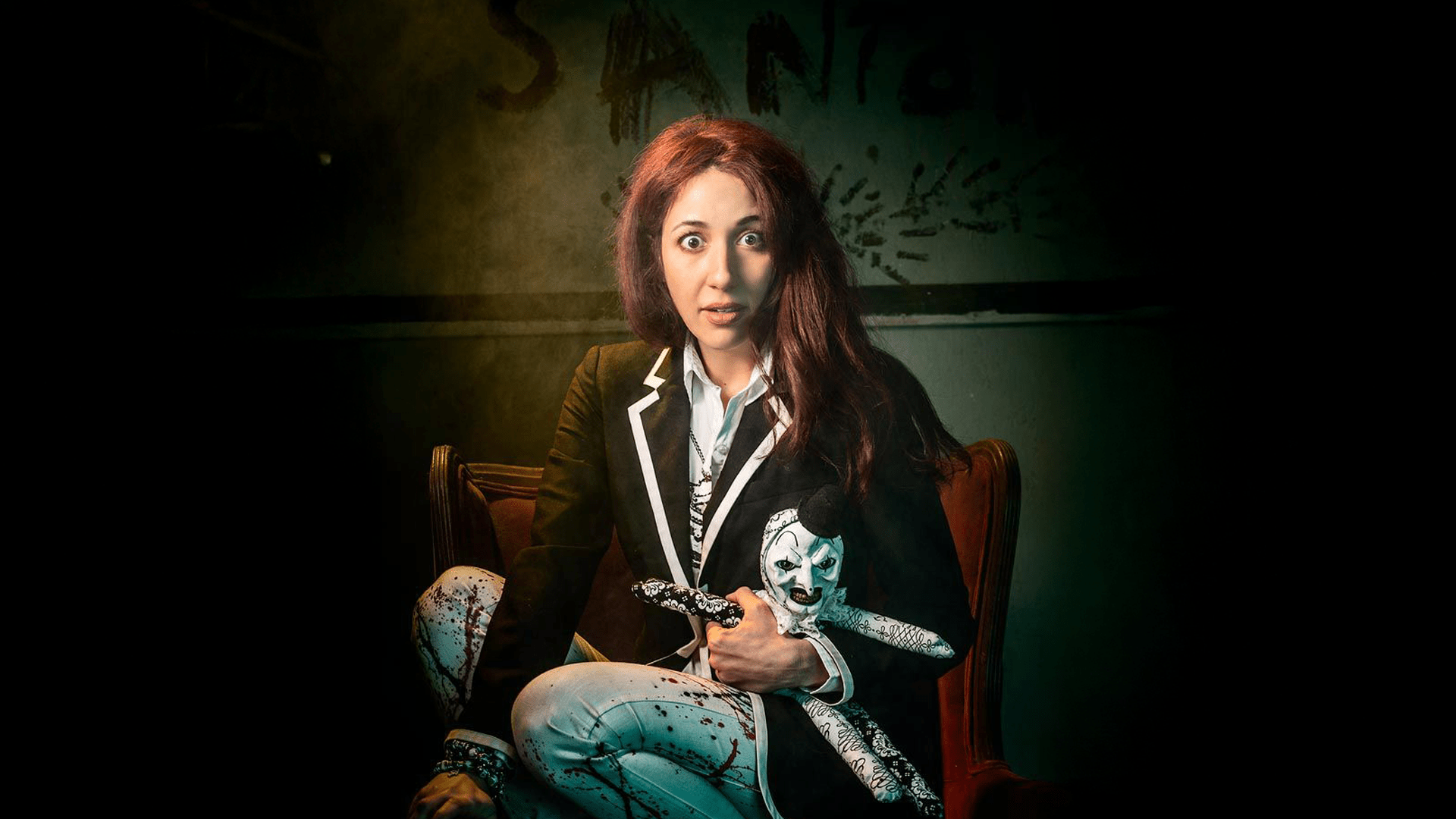
olga turkan and terrifier in front of a house
In Conversation with Olga Turka

Naked City’s production designer and wardrobe stylist Olga Turka breaks down the creativity, symbolism, and indie grit that shaped the striking visual world of Terrifier 2 & 3

In Conversation with Olga Turka
TalentJune 6, 2001

Q> I’m usually too scared for horror movies, but Terrifier really blew me away. How did you first get connected to that world?

Olga> I should preface this by saying I, too, was very scared of super gory horror. I’ve always loved the macabre, Tim Burton, that kind of stuff. But straight-up murder? Not for me. But I’ve always loved films like The Shining and Silence of the Lambs, psychological thrillers that explore things like familial trauma.

I’ve been working in the industry for about 16 years now, mostly as a wardrobe stylist and costume designer. I've done film, commercials, theatre, opera, every week is something different. A friend of mine, Anthony Giordano, who does special effects makeup, heard the director Damien Leone was looking for a costume designer and introduced us.


Q> And you jumped right in?

Olga> Actually, no! I turned the job down twice. I’d never heard of Terrifier before, so I watched the first one and was like, “Oh my God!” I was literally screaming, I had to shut the windows so my neighbours wouldn’t think something terrible was happening. Then I read the script for Terrifier 2, and what we were trying to accomplish on the budget we had seemed impossible. But after a lot of conversations, I signed on after the third time.


Q> You also end up taking on production design. Tell me about that.

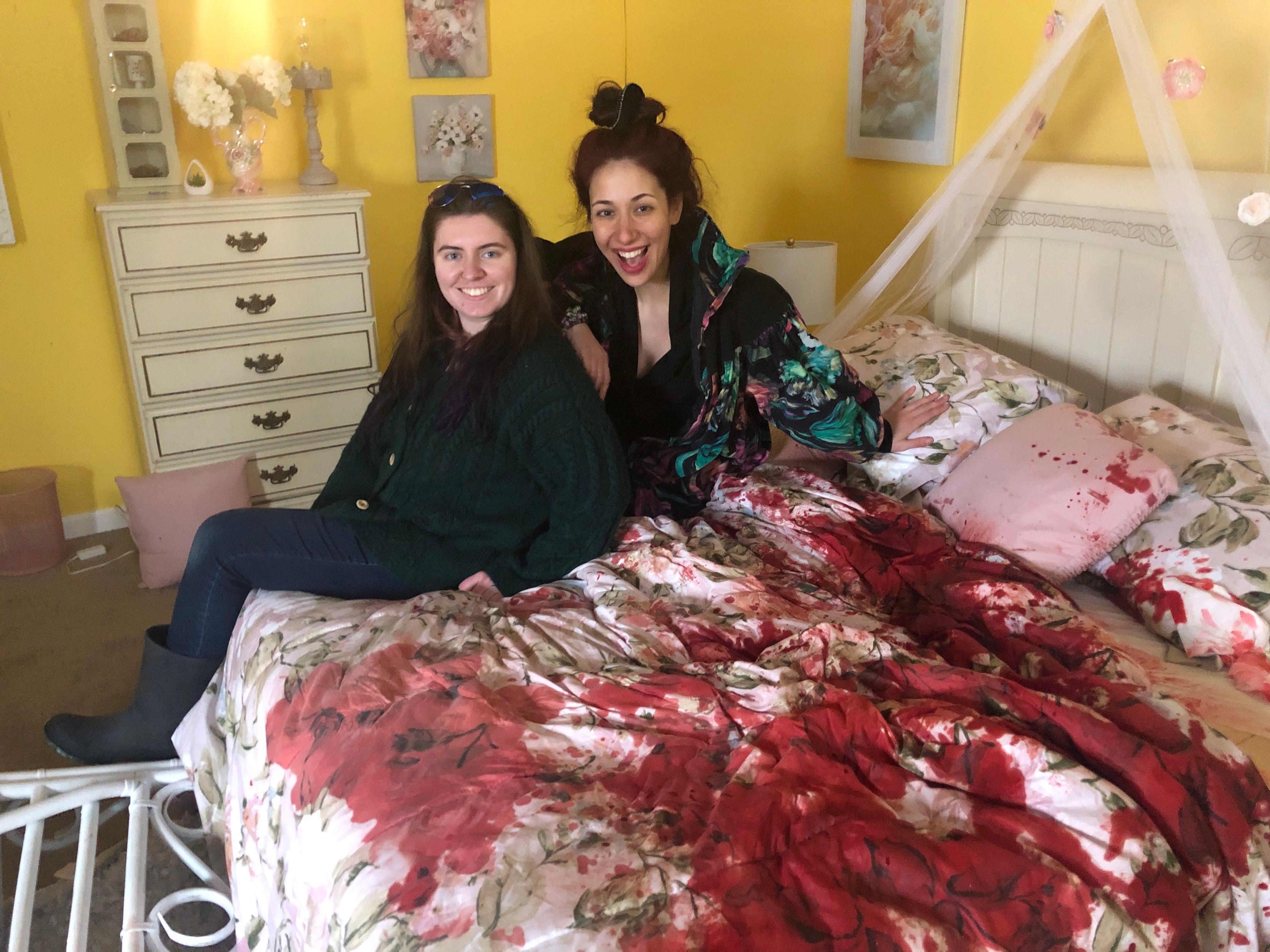
Olga> A month or two in, something happened with the set designer, and Damien asked if I could take over. I actually went into the bathroom and Googled “What does a production designer do?” I’d done some set work for commercials but nothing on that scale. But I came out of the bathroom and was like, “I can do this.”


Q> How did you juggle both roles? Do you think about them separately or together?

Olga> It can definitely be overwhelming. Once I started doing more production design, I listened to a lot of interviews with designers I admire. One of my big inspirations is Catherine Martin, who does both costume and production design for Baz Luhrmann’s films.

For me, when I’m reading a script, I’m not thinking about actors or specifics. I just imagine what it all looks like in my head, both costumes and sets. I tend to visualize everything at once, which probably helps me balance the two roles more naturally.
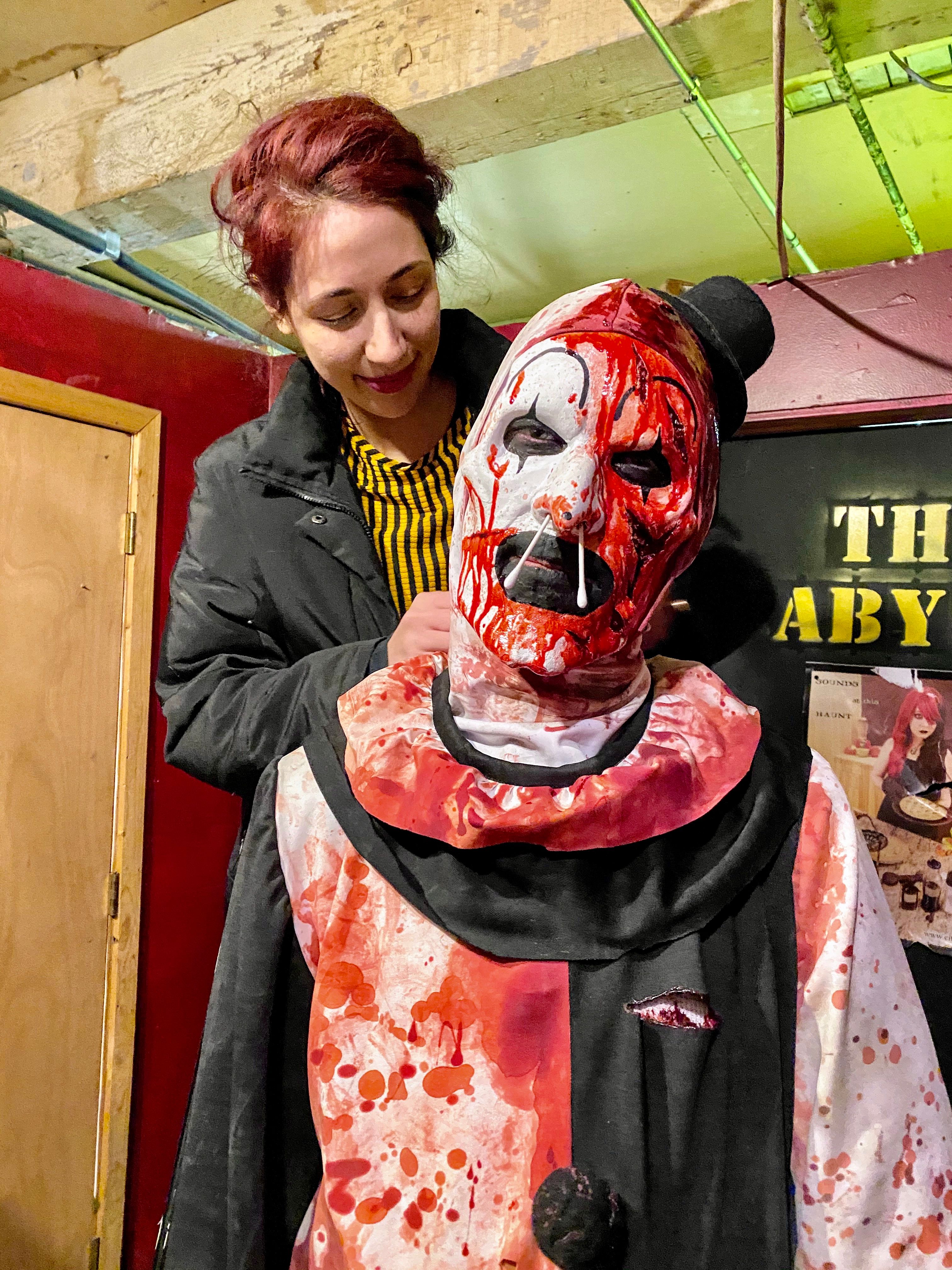
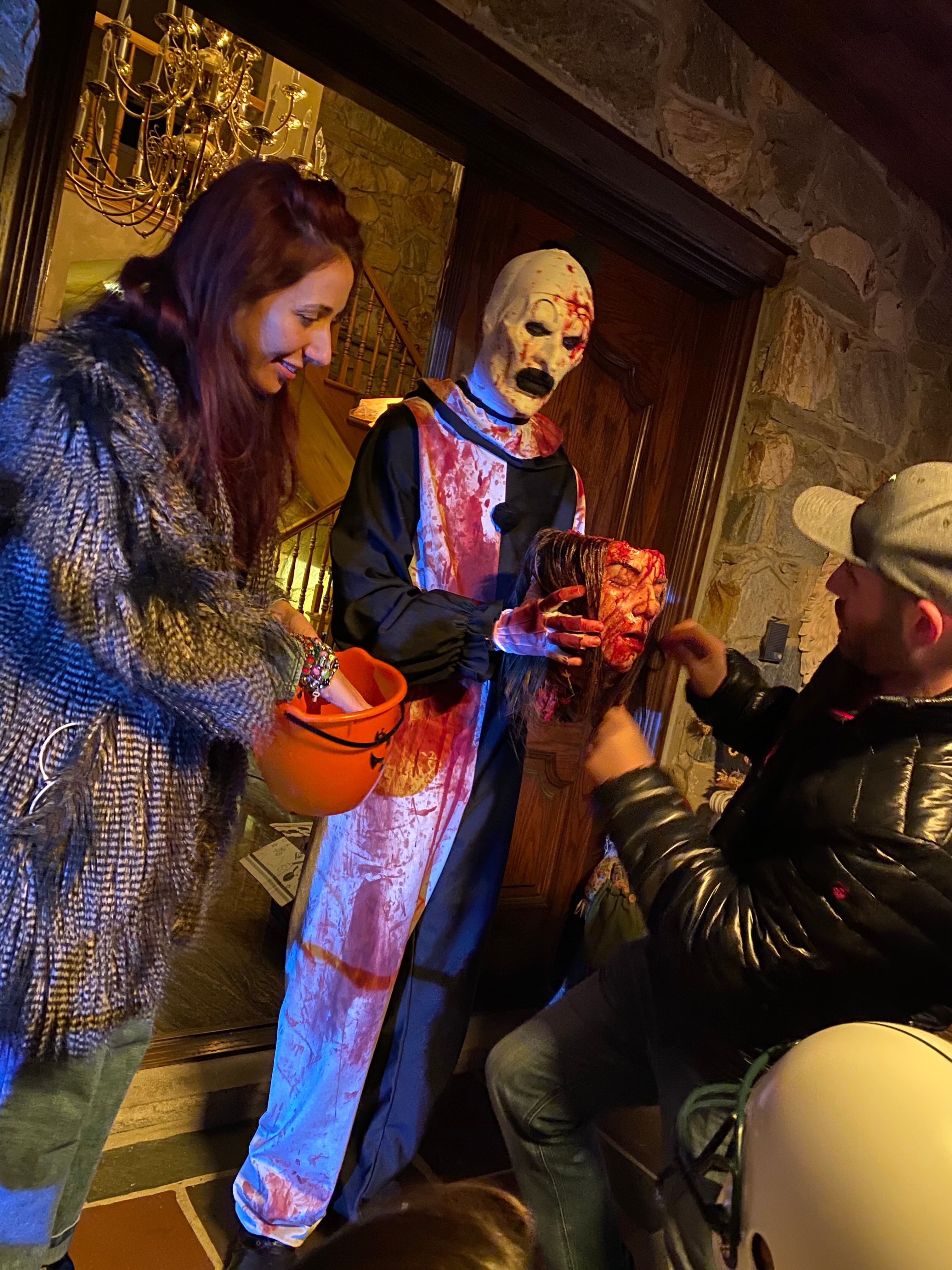
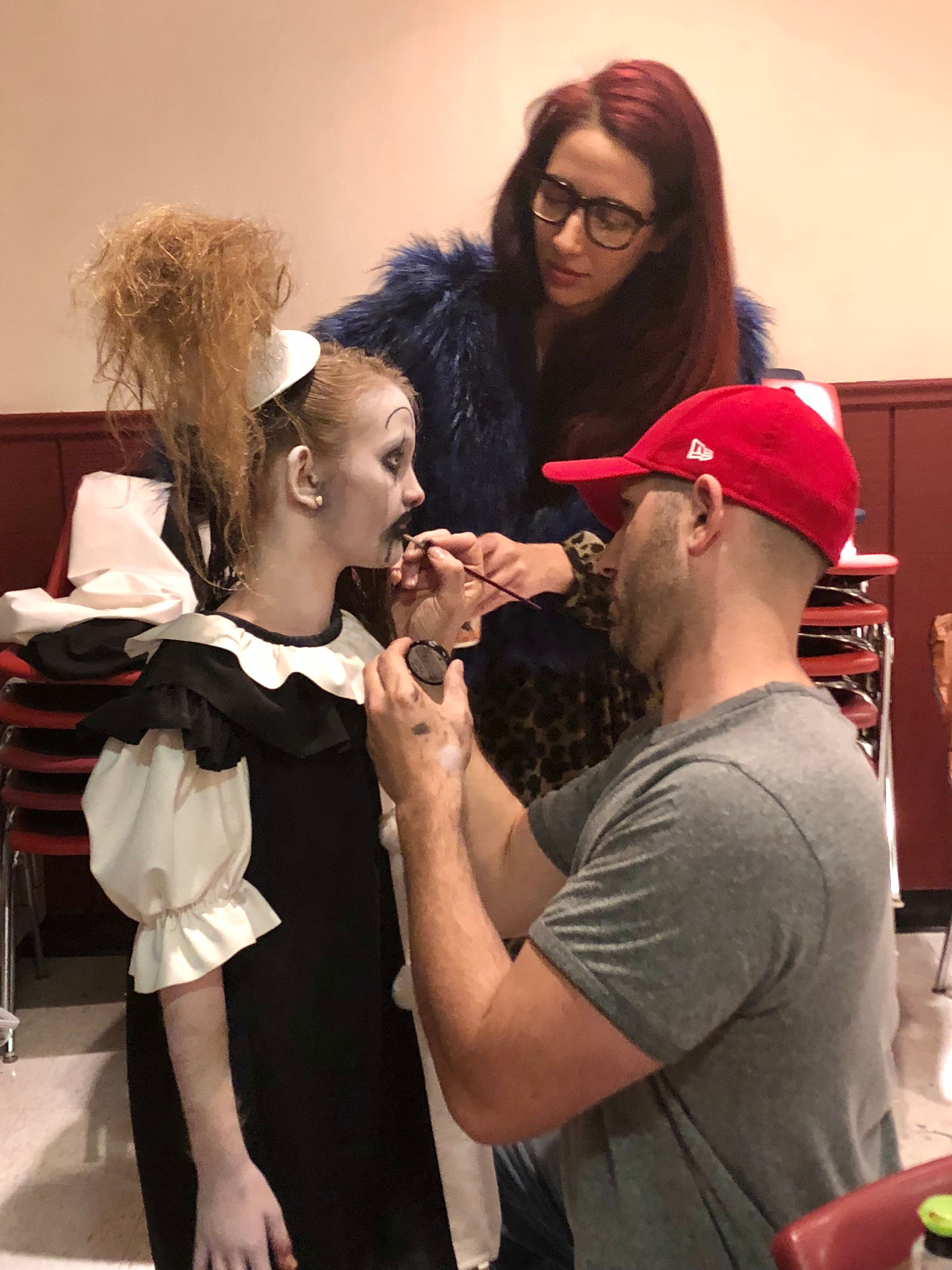
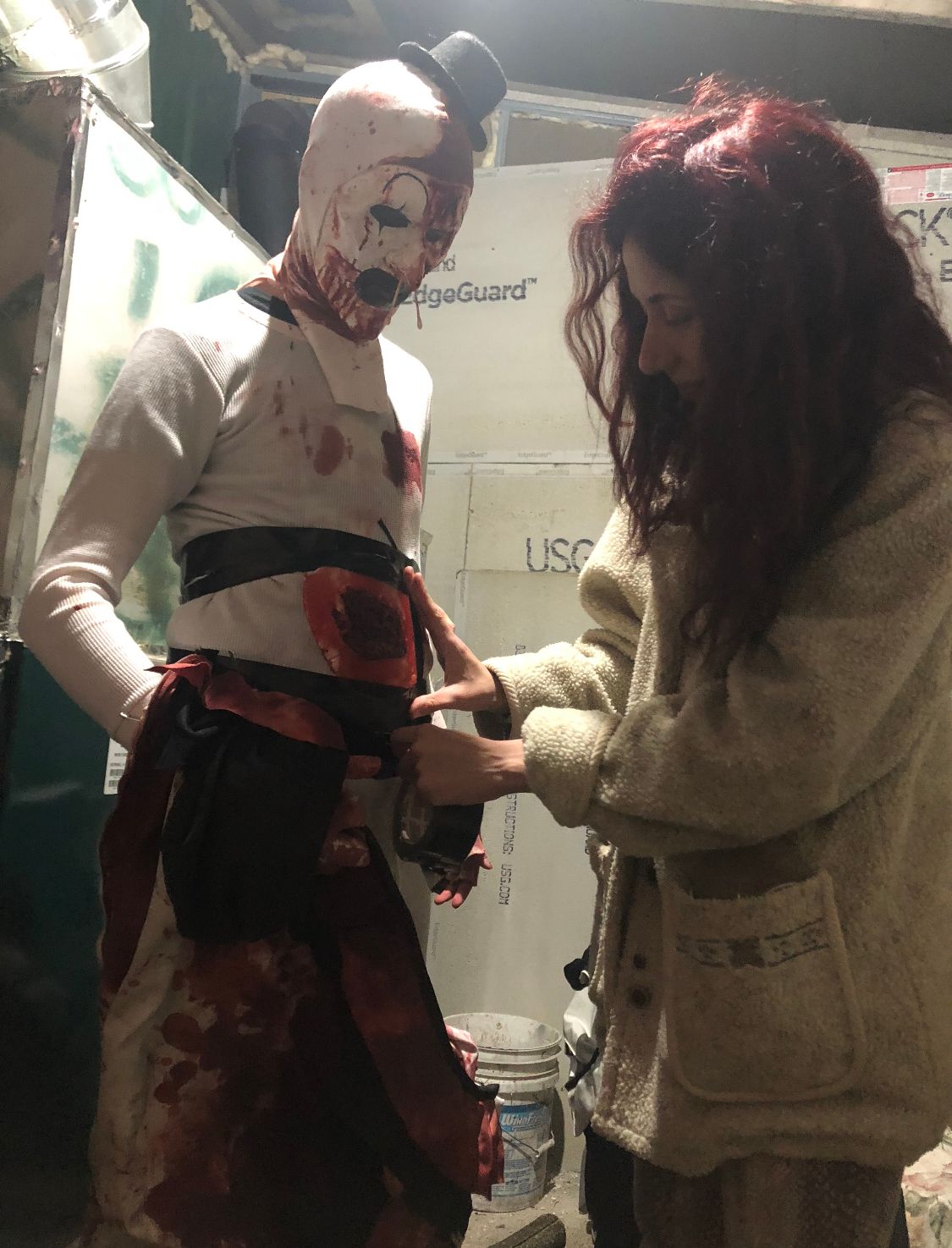
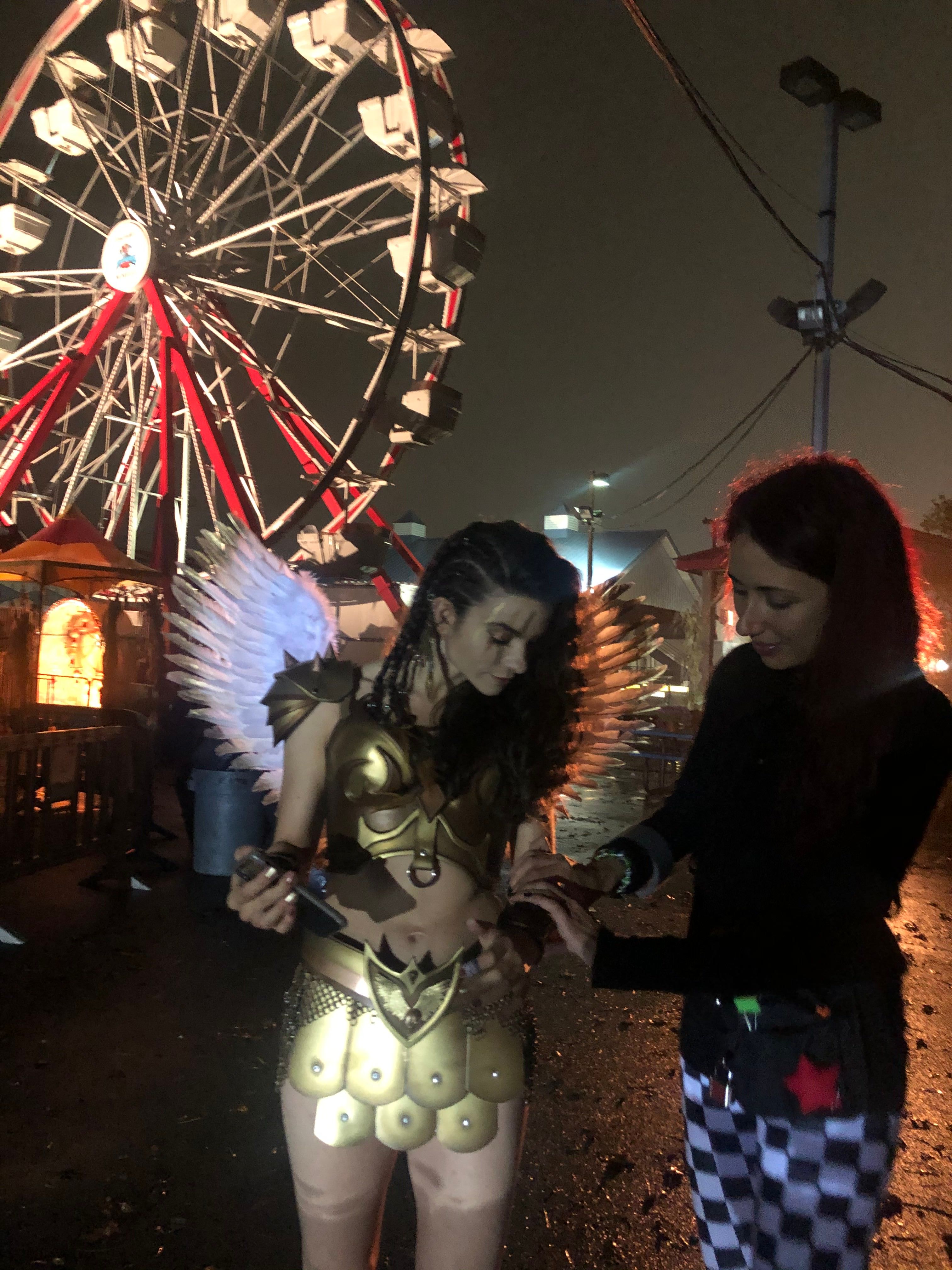
olga turka terrifier make up gore

Q> Both Terrifier films are indie productions. Can you speak to the challenges of working with a limited budget?

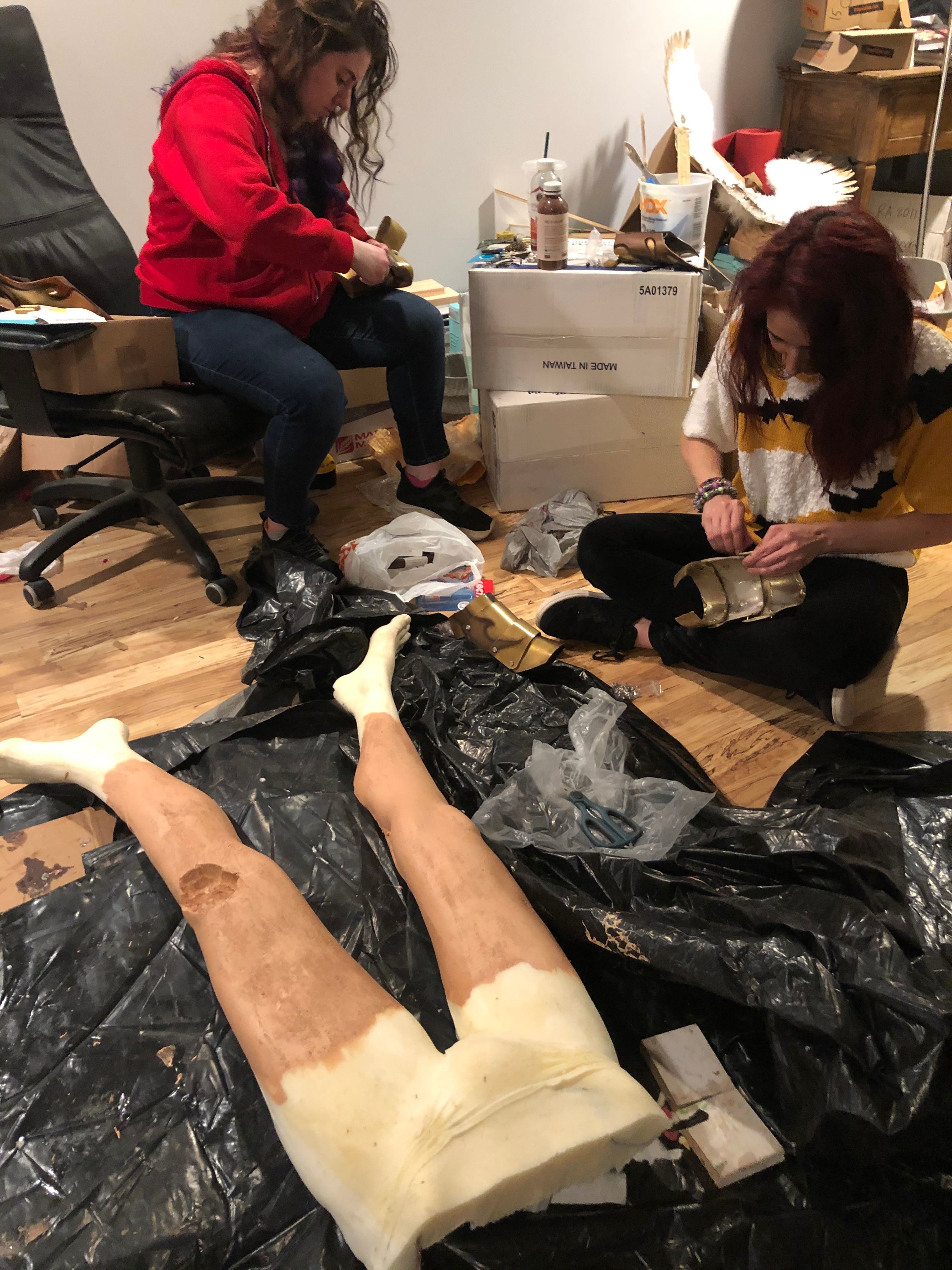
Olga> Oh, absolutely. It was the hardest thing I’ve ever done. Not to be morbid, but I was a caretaker for my father when he had cancer, and Terrifier 2 was honestly harder. During filming, we dealt with 13 car accidents, and one of our producers had a heart attack before we even started. We had such a small crew, sometimes only nine people. Lighting a room could take hours. We filmed in very remote places, like a barn in upstate New York, where the nearest store was 40 minutes away. Every step required problem-solving, but somehow, we pulled it off.


Q> There’s talk of a Terrifier 4 too, right?

Olga> Absolutely. Damien wants to finish the story. Each film ends with a bit of a cliff hanger, so he definitely has more to tell. And there was a big jump in budget from Terrifier 1 to Terrifier 3, from $250,000 to $2 million. Which still isn’t a lot for a feature film, especially considering how ambitious the scripts are. Damien writes like he has a $100 million budget! So, a huge shout out to our art and costume departments. The pace and demands were intense.


Q> Is there a particular costume moment you’re especially proud of?

Olga> Yes! There’s a very short scene in Terrifier 3 that I’m incredibly proud of, it’s a dream sequence featuring the Virgin Mary and a demon. The Virgin Mary’s costume was something our fabricator and I had a lot of fun creating. We were inspired by a cracked Virgin Mary statue I had on my mood board, and I was obsessed with the drapery and how it resembled ceramic. We visited trim and fabric stores all over New Jersey searching for the perfect weight and colour to replicate that look. Once we finalized the costume, we sent it to the FX team who put it through a stiffening process to help achieve that sculptural quality.


Q> That sounds amazing, and I imagine the payoff was huge?

Olga> Definitely. It was a dream come true, especially because the makeup on the Virgin Mary was done by John Caglione, who won an Oscar for Dick Tracy. I grew up loving that movie, so having him on set on the very first day of filming Terrifier 3, I was on cloud nine.


Q> That level of detail for a few seconds on screen really stands out. Can you talk more about your creative process when starting a new job? Do you write or collect visuals?

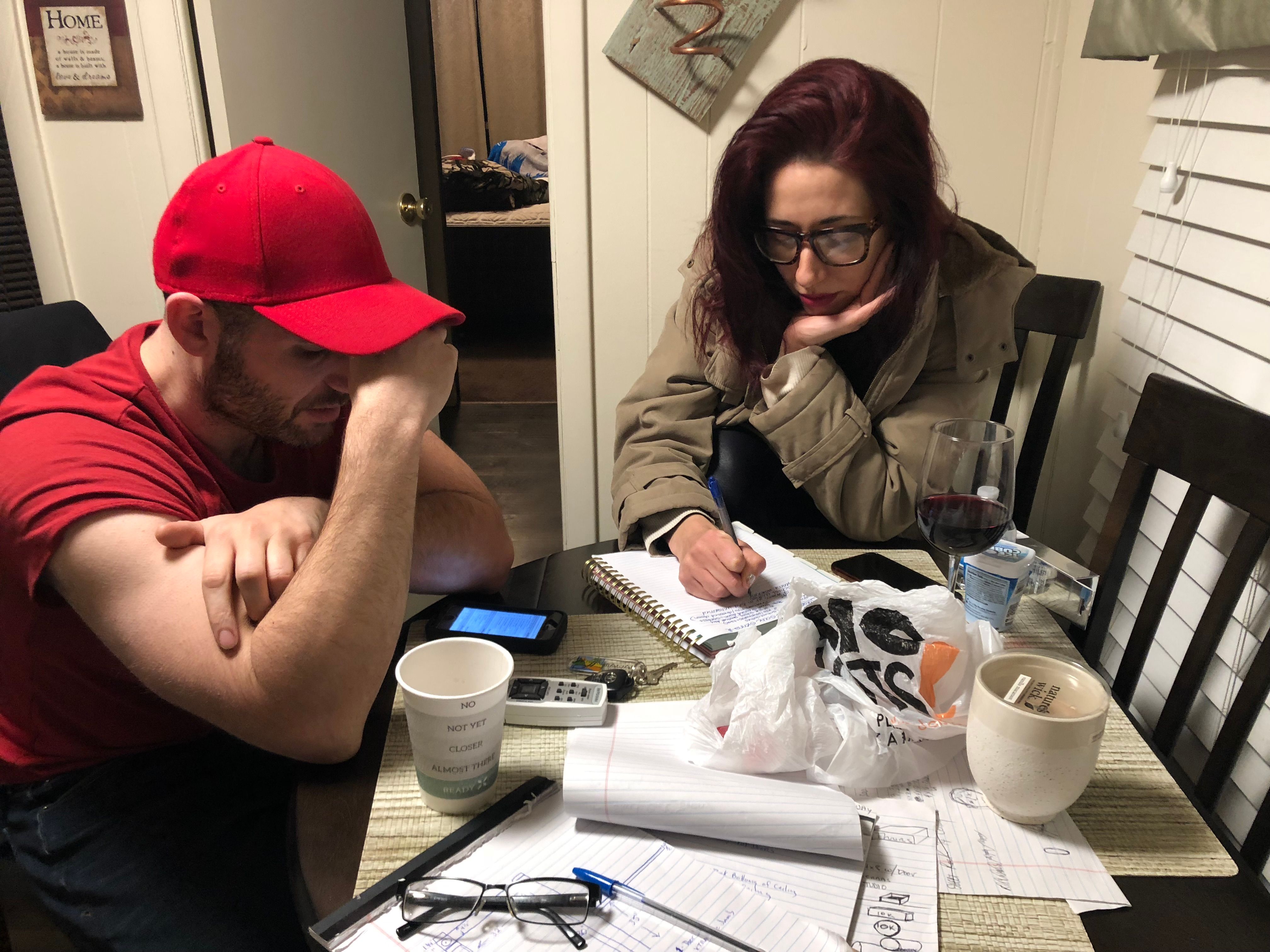
Olga> I still print out my scripts and scribble all over them. There are often subtle things no one might notice, but they help me get into the visual rhythm. My work is often more about feeling than something easily verbalized. I start building out mood boards, thinking in terms of colour, texture, and symbolism. In Terrifier 3, I used a lot of sunrise and sunset tones to echo the religious themes running through the film.

Q> And when it comes to symbolic layering, how deliberate is that for you?

Olga> Very intentional! I map out all the symbolism I want to include. Even tiny set details matter. For instance, we had a sign in a car that read, “May you be in heaven a half hour before the devil knows you're dead.” It’s an Irish proverb, and maybe no one noticed it, but in a film full of religious and demonic imagery, it fits perfectly. Sometimes a quote like that inspires the entire mood of a scene. It’s not always literal, sometimes it’s just a colour, or the fold of a curtain, that sticks with me.


Q> Who helps bring your vision to life?

Olga> I love collaborating with my team. On Terrifier 3, my art director Violet Morrison was amazing. I’ll start with a foundational idea, and she and the rest of the team help take it to the next level.


Q> Speaking of teams, what are some of the projects you're proud of?

Olga> The Heinz Black Kitchen Initiative done with Naked City Films was a wonderful project as I grew up in and worked for sometime in the hospitality industry. I just loved showcasing these talented chefs and hearing about their culinary journeys. I also loved our collaboration with Sotheby’s as a Costume Designer, and bringing Andy Warhol’s Elvis to life was a dream come true.

All of our collaborations are important to me because Naked City captures our subjects and spots in a hyper realistic, documentary style that’s very genuine and reflective of the human experience. When we did the Horizon commercial that showcased 3 generations of women, little touches of handwritten recipes, vintage aprons - those things were important to me because it reminded me of my own family and traditions.

There’s always these little moments with Naked City that lends to real life captures and creativity - it’s always an honour to design their wardrobe and spaces.

Naked City Films NYC